


SlopeLab Ratings
Detailed Scores:
Telluride Mountain Stats
Telluride, Colorado
280 inches
2,000 acres
4,425 ft
(Summit) 13,150 ft | 8,750 ft (Base)
Photo Gallery

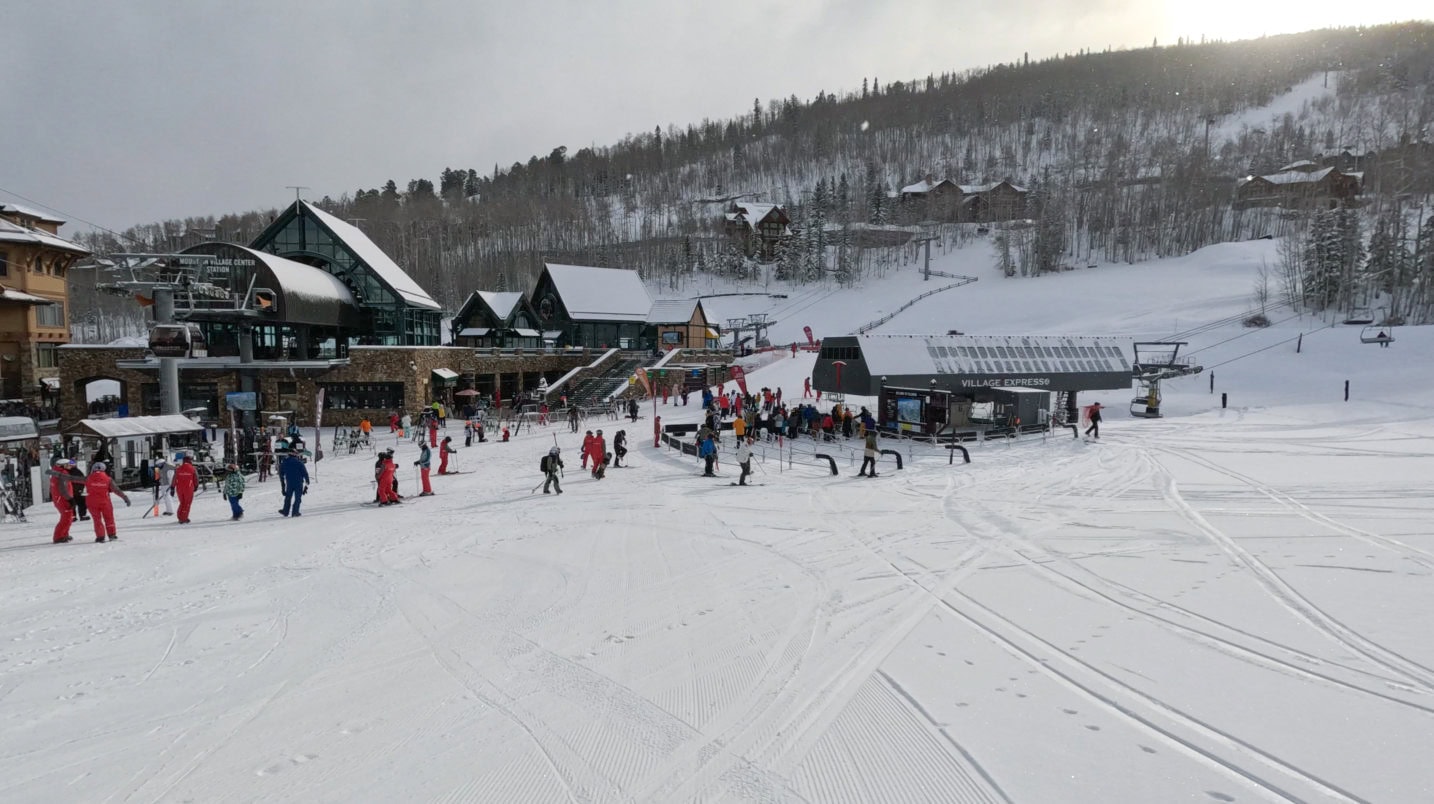


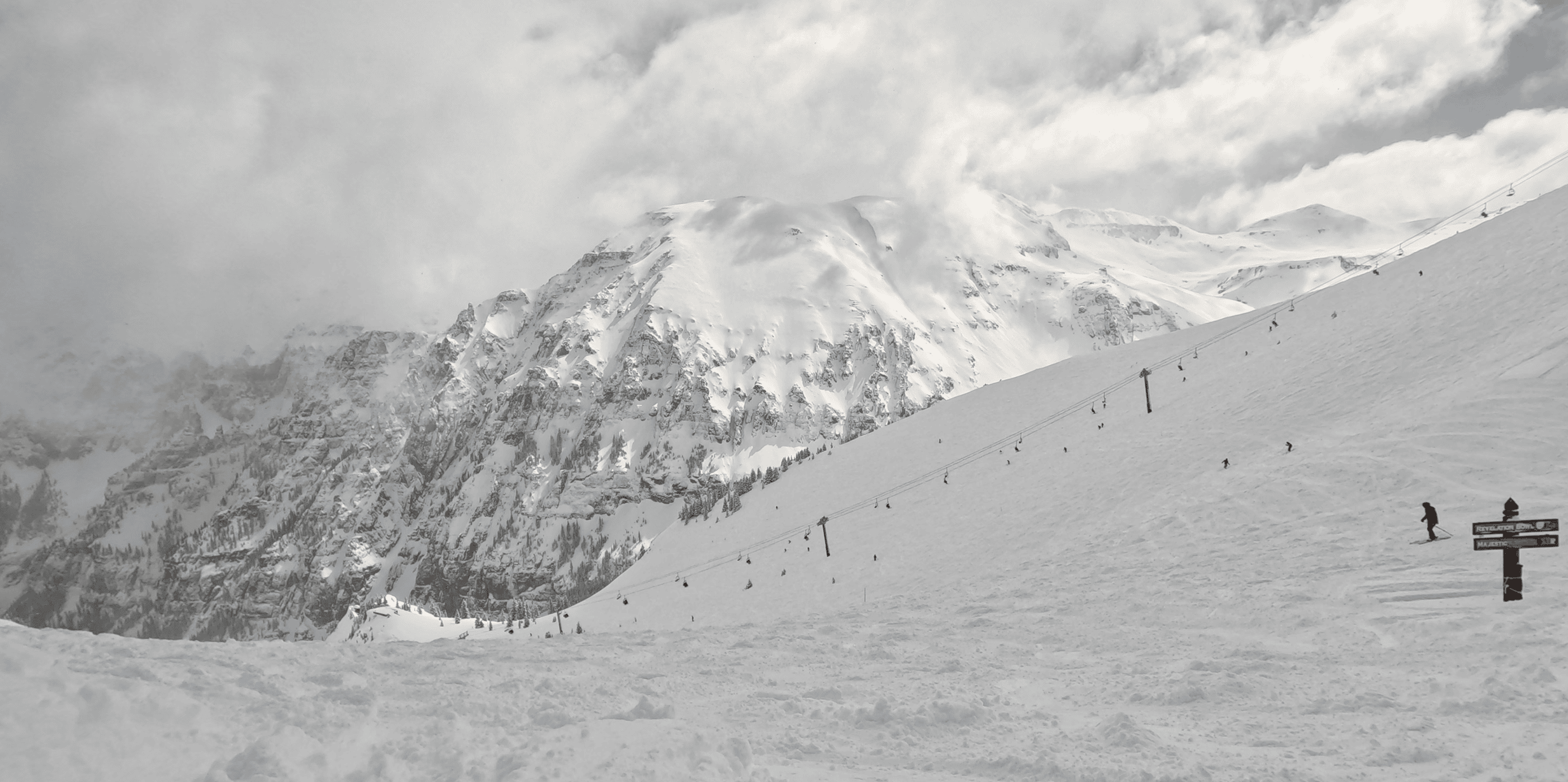

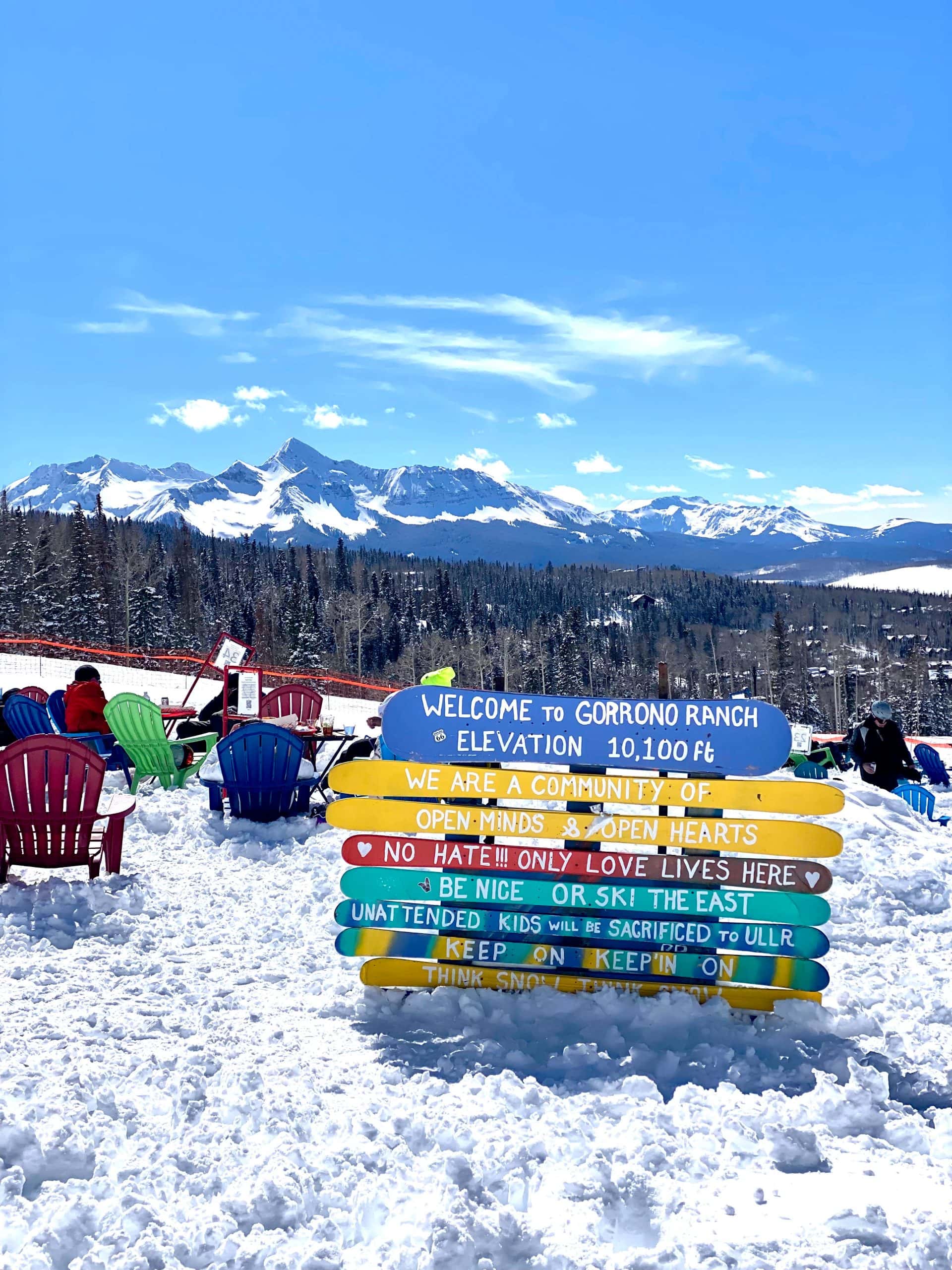
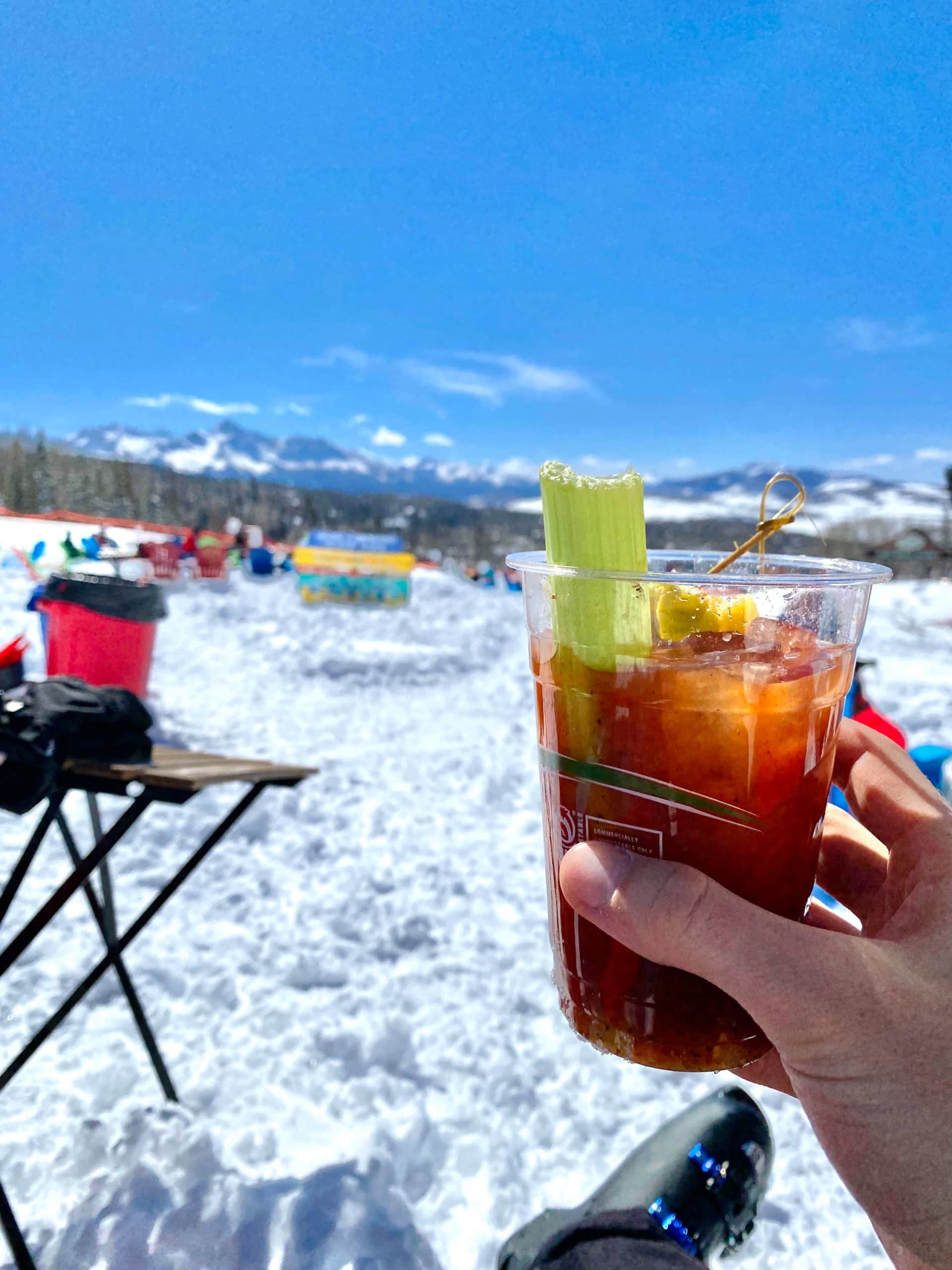
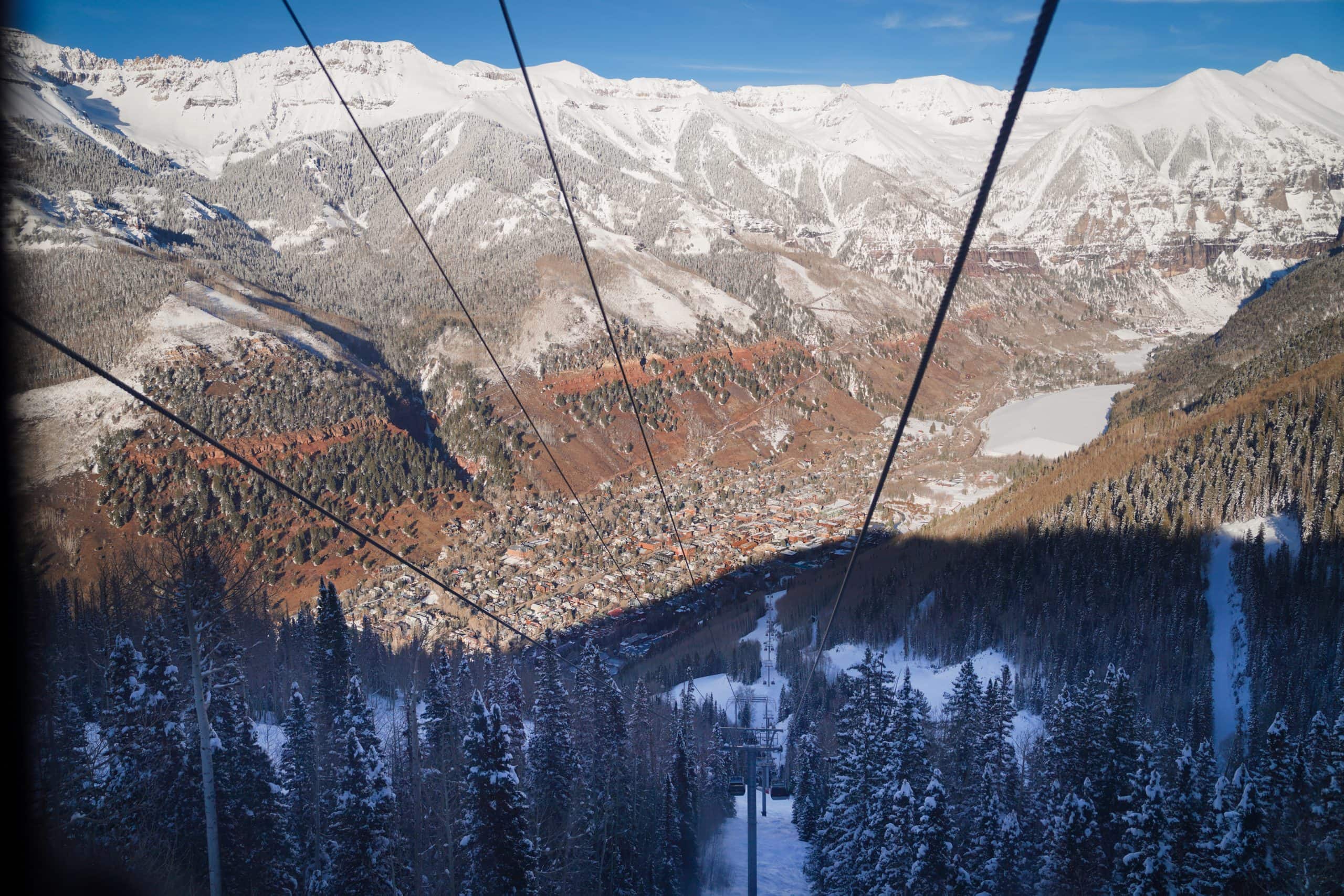

Telluride Overview
Most Colorado ski resorts get lumped together, but Telluride feels like a world apart. And that’s partly because it is…
Tucked away in a dramatic box canyon deep within Southwestern Colorado, Telluride is a remote ski resort with an almost mythical reputation. (For those in the know…)
- Stunning mountain peaks? Well, you might recognize its Rocky Mountain views from the Coors Light can. Need I say more?
- Uncrowded slopes? Forget soul crushing lift lines… this place might be the least crowded destination resort I’ve ever seen.
- A ridiculously charming mining town? Maybe the most charming. Especially when you throw in a chairlift that spills right into town, plus a Gondola that moonlights as public transportation. (Seriously, it’s free.)
For an idyllic ski trip, Telluride truly has it all. Except for pretentiousness. Which is pretty impressive, considering the world-class experience this place offers.
So whether you’re here for thigh-burning steeps, wide-open cruisers, or just an après-ski scene with a view that’ll make you rethink your life choices, let’s break it all down.
Telluride Trail Maps

Telluride Lift Info
| Lift | High Speed? | Vertical Rise (ft.) |
|---|---|---|
|
Plunge |
Yes |
2,125 |
|
Lift 7 |
No |
1,845 |
|
Sunshine Express |
Yes |
1,735 |
|
Gold Hill Express |
Yes |
1,475 |
|
Village Express |
Yes |
1,245 |
|
Apex |
No |
1,145 |
|
Prospect Express |
Yes |
1,050 |
|
Oak Street |
No |
1,055 |
|
Polar Queen Express |
Yes |
935 |
|
Revelation |
No |
783 |
|
Chondola |
Yes |
385 |
|
Comp Hill |
No |
355 |
|
Ute Park Express |
Yes |
275 |
|
Lynx |
No |
30 |
Telluride Terrain Overview
At just over 2,000 acres, Telluride is one of the smaller destination resorts, but don’t be fooled. This mountain packs a serious punch.
Telluride rocks over 4,000 feet of vertical (3,765 of which can be skied without hiking), with slopes so dramatic it makes most of the Colorado competition feel like bunny hills. And yet, the mountain efficiently utilizes its footprint better than just about anywhere, meaning skiers of all abilities will have more than enough terrain to keep them entertained for days.
Telluride for Beginners
Telluride is a fantastic beginner’s mountain. Maybe one of the best.
Looking at the trail map, the resort obviously has a healthy collection of green runs. What’s a little less obvious are many of Telluride’s unfair advantages for creating an awesome experience for new skiers.
For one, compared to the chaos found at less remote Colorado mountains, Telluride is one of the least busy mountains around. This means beginners are free to practice the sport with tons of elbow room. Telluride’s design then doubles down on this with a fantastic layout, where the green terrain is almost entirely isolated from the more extreme stuff:
- The Chondola area is a perfectly secluded bunny hill for the never-evers.
- When they’re ready to progress, the Sunshine Express lift offers long, flat greens, and even has cutoffs to sample easier blues.
- And if that all goes well, green skiers can meander over to the top of Prospect Express or Village Express, where some of the most jaw-dropping views in skiing await.
If that natural progression along with stunning mountain scenery doesn’t convert them to the sport, I’m not sure what will!
Telluride for Intermediates
Telluride has a bunch of blue terrain all over the mountain, so intermediates are sure to have a good time.
The highlight is easily the iconic “See Forever” trail, a blue groomer that runs along the whole resort’s ridge line. It features rolling terrain and some of the best views in skiing, and when connected with Lookout or Butterfly, offers nearly 4,000 feet of continuous vertical. Unfortunately though, it does have a few flat spots, and the run can’t be lapped due to the mountain’s lift layout. Which brings me to my only complaint about the blue terrain at Telluride…
If I was being as honest as possible (and maybe nitpicking a bit, which is in some ways the whole point of this website) then I would caution that a lot of Telluride’s blue terrain doesn’t have the consistent, fast pitch of nearby competitors like Aspen, Vail, or even Breckenridge. Instead, a lot of the runs are of the shorter variety, and/or have periodic run-outs or off-kilter double fall lines.
Advanced Terrain at Telluride
Telluride really starts to open up for the black diamond skiers. Unquestionable, two of the most amazing parts of the mountain are its “Plunge” frontside and “Revelation Bowl” backside. Both areas are loaded with steeper black terrain in what’s easily one of the most beautiful settings in North America.
Advanced skiers will have a blast “plunging” (pun intended) into town, where Telluride’s iconic box canyon setting shines on full display. These are steep runs, and you literally feel like you’re on top of town as you ski down towards it. (With stunning views of the breathtaking mountain peaks on all sides, of course.) It’s truly some of the most memorable advanced terrain I’ve ever experienced.
The same applies to Revelation Bowl. This modestly sized bowl feels like it was tailor made for lapping black groomers and moguls, again and again. And the setting is unbelievable – the chairlift is sandwiched so close to towering mountain peaks and dramatic valley canyons that it doesn’t even feel real.
Get those cameras out and lay down your best tracks; if you ever wanted to recreate the cover of a ski magazine, this is your chance!
Expert Terrain at Telluride
It should come as no surprise that a mountain with such violent-looking peaks features some of the gnarliest expert terrain in North America, and that’s exactly what you can find at Telluride.
Telluride has several double-black bumps and steeper trees located within an easy ski from multiple chairlifts, but the real highlight comes from hiking to the legendary Palmyra Peak and Black Iron Bowl.
Here, you’ll find dozens of runs, chutes, and bowls with sustained pitches near (and in excess) of 50 degrees steepness, something that’s pretty much unheard of at more sane resorts around the country. Getting there requires lengthy hikes at serious elevation though — hope you brought your lungs!
The most iconic route might be the “Gold Hill Stairs” — a diabolical metal staircase installed via helicopter at 12,500+ feet — which makes access to the rugged Gold Hill Chutes a little more accessible. For those willing to make the hike, the steeps and long-lasting powder are unmatched.
How is the snow at Telluride?
Telluride receives a respectable 280 inches of snow per year, but this is another instance where the official mountain stats don’t tell the full story.
Telluride is one of the highest elevation ski resorts in the country, and nearly all of its terrain is north facing, so this is a mountain that preserves snow better than nearly anywhere else. So while big dumps are rare, good snow conditions are extremely consistent.
Where is Telluride?
Telluride is in the bottom corner of southwestern Colorado, over 6 hours from Denver. I usually recommend flying into the Montrose Regional Airport, but I also wrote a detailed blog post outlining your 5 best options for getting to Telluride.
Telluride as Ski town
Telluride is a world-class ski town. But I’d argue it isn’t just a ski town, it’s a whole vibe.
Being tucked away in Colorado’s San Juan Mountains, there might not be a more beautiful setting in skiing. With jagged peaks, historic buildings, and a healthy mix of powder and sunshine, this place feels like it was ripped straight from a snow globe.
Impressively though, unlike some of the more commercialized Colorado ski resorts (not naming names… Vail) Telluride still keeps its soul intact. As a historic mining town, downtown stays true to its roots with no chain restaurants and no massive crowds. Just pure, unfiltered mountain magic.
One of Telluride’s most unique highlights is the free gondola. It links the historic downtown to the higher elevation Mountain Village and runs until midnight every night. Where else can you hop on a gondola and glide over to a charming old mining town, grab delicious dinner with a few drinks, and then float back to your luxurious Mountain Village lodging? Talk about a power move…
Speaking of which, you definitely don’t need a rental car here. In fact, you probably won’t even want one. Between the walkable downtown, free Gondola, and Oak Street Lift, there’s really no reason to hassle with parking.
And the best part? Telluride still feels like a hidden gem. Sure, the secret is fully out, but the location is still just far enough from most airports and major metro areas to keep the casual tourists and weekend warriors at bay. Exclusivity, without the pretentiousness. Welcome to Telluride!
When is the best time to visit Telluride?
March - April
Because Telluride doesn’t get a ton of snow, but does preserve what it gets extremely well, the best time to visit is usually later in spring, around March to April. This ensures the steeps get enough coverage, while also increasing your odds for those jaw-dropping bluebird days that the scenery is so famous for.
How are the crowds at Telluride?
Because of its remote location, Telluride is one of the least crowded destination resorts in the country.
I can still remember my first trip to Telluride, where the mountain was a total ghost town on a Friday morning after a 5 inch snowstorm. (Seriously, check out that blog post for some pics. If you’re used to skiing at the usual Colorado resorts, you might not believe your eyes.)